loader
  • National Institute of Opthalmology & Hospital

    Government of the Public Republic of Bangladesh
  • Sat - Thu: 8:00 am - 2:30 pm

  • Emergency 24/7

Departments That We Provide

Cataract

The Cataract Department at NIOH is dedicated to the prevention, diagnosis, and surgical management of cataract – the leading cause of reversible blindness in Bangladesh. The department integrates modern diagnostic facilities, advanced surgical techniques, and community outreach programs to restore vision and improve quality of life.

Clinical Examination and Investigation

The department provides a wide range of pre-operative and diagnostic assessments, including:

  1. Visual Acuity Testing – baseline and best-corrected visual acuity.
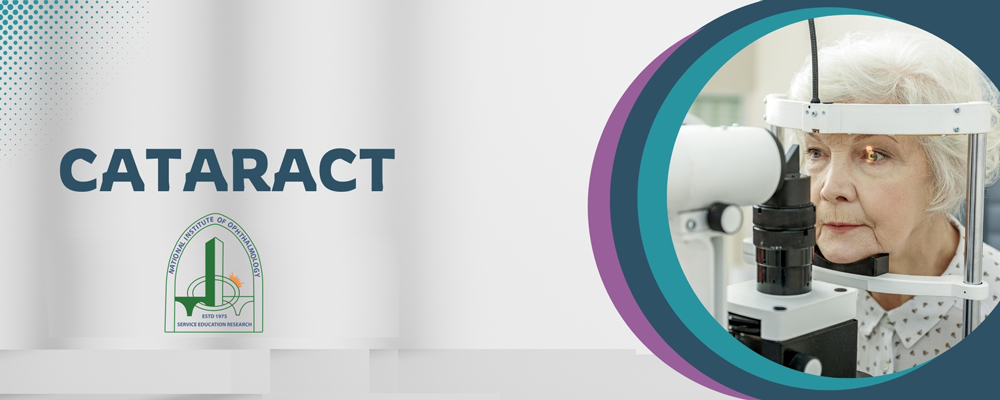
  2. Slit Lamp Examination – anterior segment evaluation and cataract grading.
  3. Tonometry – intraocular pressure measurement to rule out glaucoma.
  4. Dilated Fundus Examination – retinal and optic nerve assessment pre-surgery.
  5. Keratometry – corneal curvature measurement for IOL power calculation.
  6. A-Scan Biometry / Optical Biometry – axial length measurement for intraocular lens (IOL) power determination.
  7. B-Scan Ultrasonography – evaluation of posterior segment in mature, dense, or complicated cataracts.
  8. Anterior Segment Photography – for documentation and monitoring.
  9. Systemic Investigations – blood sugar, blood pressure, and relevant systemic screening for safe surgery.

Procedures

The Cataract Department offers state-of-the-art cataract treatment procedures:

  1. Phacoemulsification Surgery – sutureless, small-incision cataract extraction with foldable IOL implantation.
  2. Manual Small Incision Cataract Surgery (MSICS) – economical and effective technique, particularly in high-volume cases.
  3. Extracapsular Cataract Extraction (ECCE) – for advanced or complicated cataracts.
  4. Secondary IOL Implantation – for aphakia management.
  5. YAG Laser Capsulotomy – for posterior capsular opacification (PCO).
  6. Pediatric Cataract Surgery – including lensectomy, IOL implantation, and amblyopia management.
  7. Combined Surgery – cataract with glaucoma (phaco + trabeculectomy) or cataract with vitrectomy when needed.

Surgical Services

The department is equipped to handle routine, complex, and referral cases with specialized surgical care:

  1. Day-care Cataract Surgery – enabling rapid recovery and early discharge.
  2. Micro-incision Cataract Surgery (MICS) – advanced technique with minimal wound size.
  3. Premium IOL Services – toric, multifocal, and aspheric IOLs for refractive correction.
  4. Complicated Cataract Management – trauma-related cataracts, subluxated lens, and cataracts with uveitis.
  5. Anterior Vitrectomy – in cases of posterior capsule rupture.
  6. Pediatric Cataract Surgical Services – specialized care with general anesthesia and postoperative visual rehabilitation.
  7. Refractive Cataract Surgery – cataract surgery combined with spectacle independence solutions.

Cataract Services – Treatment Plans & Strategies

The Cataract Department at NIOH adopts a comprehensive and inclusive approach for cataract management across all age groups:

  • Community Outreach & Screening: Organizing cataract detection camps and referral programs for rural and underserved populations.
  • Early Detection Programs: Routine eye screening for elderly and diabetic patients.
  • Customized Surgical Planning: Individualized IOL selection and surgical technique based on patient needs and systemic health.
  • Postoperative Rehabilitation: Vision correction, amblyopia therapy (for children), and low-vision support if required.
  • Training & Capacity Building: Training ophthalmology residents and surgeons in modern cataract techniques (Phaco, MSICS).
  • Research & Development: Participation in national programs for blindness prevention and innovation in surgical techniques.
  • Affordable & Accessible Care: Providing free or subsidized surgeries under national blindness prevention initiatives.
Emergency Hotlines